
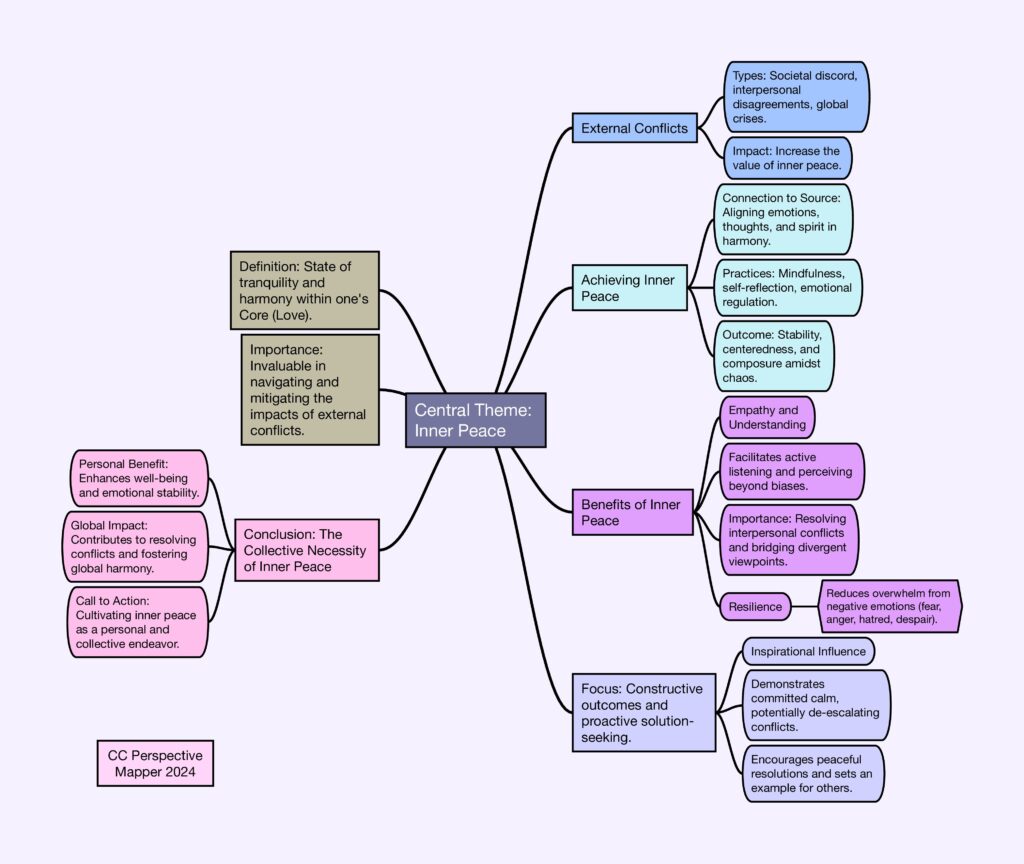
In an era where external conflicts—be it societal discord, interpersonal disagreements, or global crises—seem more pervasive than ever, the value of inner peace becomes paramount. Inner peace, the state of tranquility and harmony within one’s Core (Love), serves as an invaluable asset in navigating and mitigating the impacts of such conflicts. This article delves into how cultivating inner peace can empower us to approach external challenges with clarity, compassion, and effective solutions.
At its core, inner peace is about achieving a balanced state of mind through our connection to Source, where one’s emotions, thoughts, and spirit align in harmony, despite the external chaos. It acts as a stabilizing force, allowing individuals to remain centered and composed, even and especially in the face of adversity. This inner calm is not a passive state but an active practice of mindfulness, self-reflection, and emotional regulation, which enables us to respond to external pressures with a sense of iterative control and purpose.
One of the key values of inner peace in dealing with external conflict is its role in opening up empathy and understanding. When we are at peace with ourselves, we are better equipped to listen actively, perceive beyond our biases, and appreciate and feel into the perspectives of others. This empathetic stance is crucial in resolving interpersonal conflicts and building bridges across divergent viewpoints.
Moreover, inner peace enhances our resilience, allowing us to confront challenges without being as overwhelmed by negative emotions of fear, anger, hatred or despair. This resilience is vital in maintaining our focus on uncovering constructive outcomes, rather than getting caught up in the heat of the conflict. It also fosters a proactive mindset that encourages looking for solutions rather than dwelling on problems.
Furthermore, inner peace can inspire change in others. When we approach conflicts from a place of committed calm, it sets a potent example for those around us, potentially de-escalating tense situations and encouraging a more peaceful resolution.
In conclusion, the value of inner peace in dealing with external conflict cannot be overstated. It equips us with the emotional stability needed to navigate the complexities of human interactions and global challenges. By prioritizing our inner peace, we not only enhance our own well-being but also contribute to a more harmonious world. Cultivating inner peace is, therefore, not just a personal endeavor but a collective necessity in our pursuit of resolving conflicts and fostering global harmony.
Ranjeeth Thunga
Perspective Mapper